
When procuring custom apparel for corporate workwear, promotional events, or retail fashion lines, one technical specification dictates how the garment looks, drapes, and endures over time: GSM (Grams per Square Meter). Many buyers mistakenly equate higher GSM with higher quality, but in professional textile manufacturing, GSM represents fabric weight and density, not cotton purity or yarn refinement.
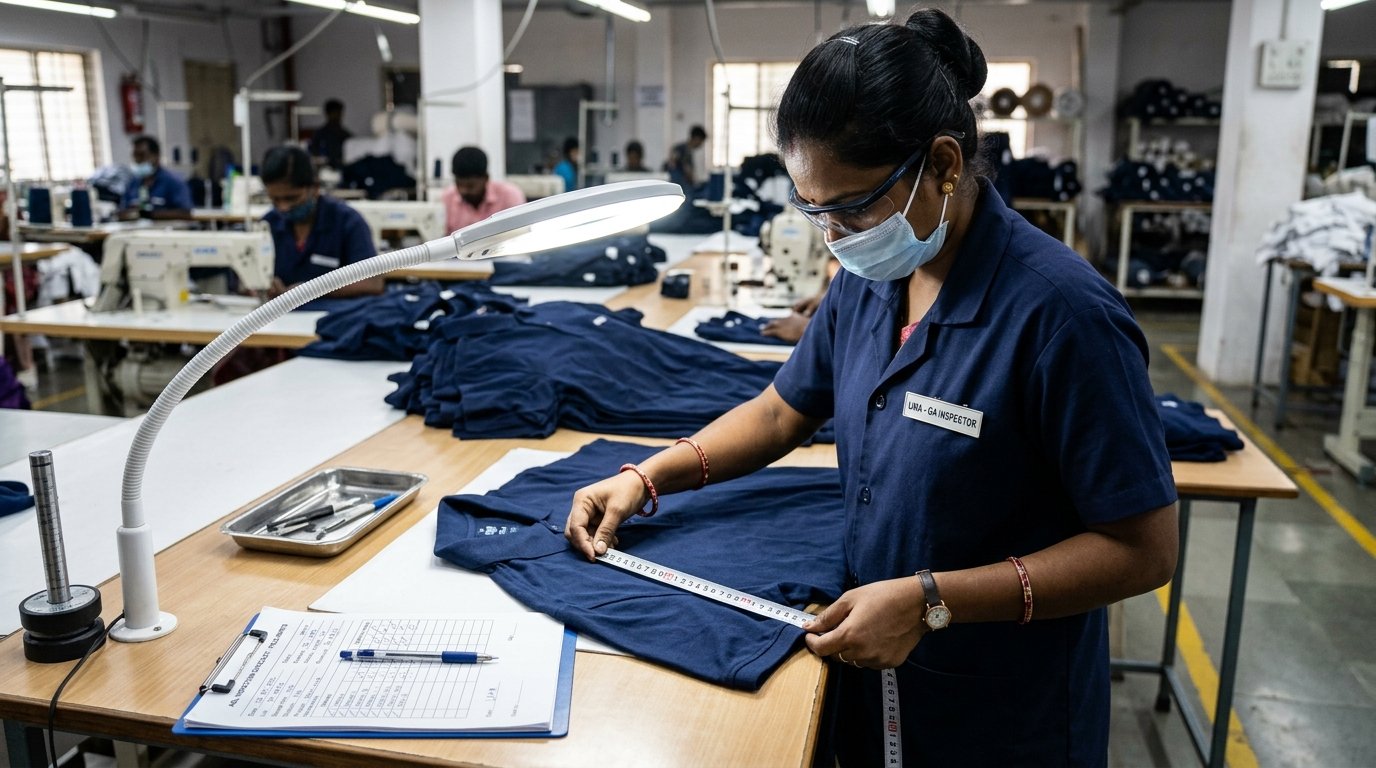
At Polos Inc, we manufacture over 50,000 custom knitted garments monthly in Tirupur. Choosing the wrong GSM leads to employee complaints of overheating in summer or t-shirts sagging and losing structural shape after three washes. Below, our textile engineering team provides an insider’s breakdown of GSM ratings, yarn counts, and practical recommendations for your next bulk order.
What Does GSM Mean in Garment Manufacturing?
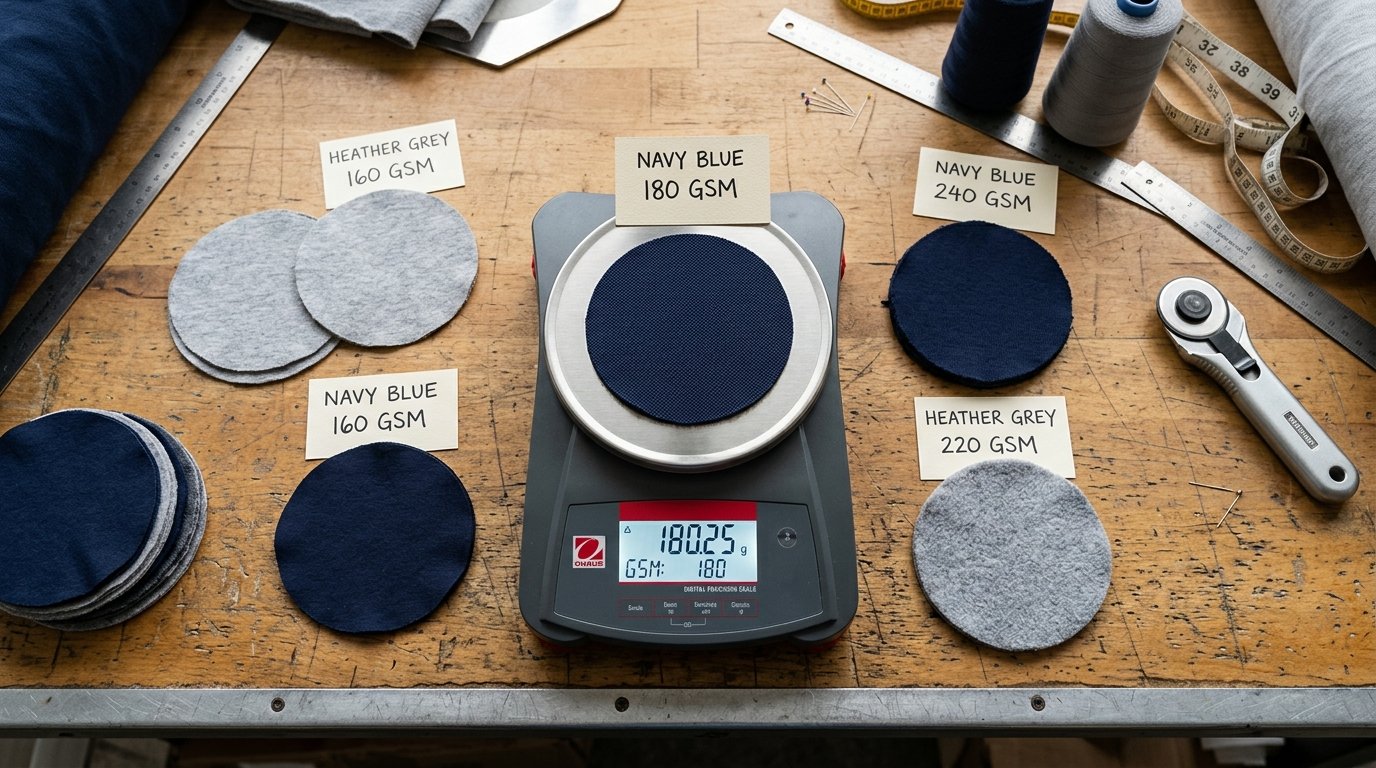
GSM stands for Grams per Square Meter. It measures the metric weight of one square meter of fabric. Textile laboratories measure GSM using a precision circular swatch cutter (typically 100 cm² cutting area) and an electronic balance scale calibrated to 0.01 grams.
GSM is influenced by three core variables during knitting in Tirupur circular knitting machines:
- Yarn Count (English Yarn Number – Ne): Thinner yarns (such as 30s or 40s combed cotton) create lightweight, breathable fabrics. Heavier yarns (such as 20s or 16s cotton) produce thick, structured knits.
- Knit Structure: A single jersey knit requires fewer loops per inch than a double-pique honeycomb knit, meaning a polo shirt naturally demands higher GSM than a crew neck tee to maintain collar stability.
- Loop Density & Finishing: Compact knitting gauge and pre-shrunk bio-washing tighten the loop formation, increasing the finished GSM by 5% to 8%.
Comprehensive GSM Comparison Chart for T-Shirts & Polos
Below is our factory specification chart mapping standard garment categories against optimal fabric weights and recommended yarn counts:
| GSM Range | Fabric Structure | Recommended Yarn Count | Hand Feel & Breathability | Ideal Commercial Application |
|---|---|---|---|---|
| 140 – 160 GSM | Single Jersey / Micro-Poly Mesh | 34s or 36s Combed Cotton / 75D Poly | Ultra-lightweight, high airflow, sheer drape | Marathon t-shirts, budget promotional giveaways, hot climate field gear |
| 170 – 190 GSM | Single Jersey Combed Cotton | 30s or 32s Super Combed Cotton | Balanced softness, zero transparency, breathable | Standard retail round-neck t-shirts, startup merch, everyday casual wear |
| 210 – 230 GSM | Honeycomb Cotton Pique / Matty Knit | 24s or 26s Compact Pique | Substantial body, structured collar support, durable | Executive corporate polo uniforms, hospitality staff, front-desk workwear |
| 240 – 260 GSM | Heavy Pique / French Terry Knit | 20s Combed Cotton / Double Pique | Premium heavyweight hand feel, zero cling, crisp drape | Luxury corporate gifting, golf apparel, premium executive attire |
| 280 – 320 GSM | Loopknit / Heavy Terry / Interlock | 16s or 2/30s Heavyweight Combed Cotton | Thick, structured, rugged, drop-shoulder drape | Oversized streetwear tees, winter t-shirts, premium hoodies |
Explore our stock options on our 100% Cotton Polo T-Shirts and Bulk Wholesale T-Shirts catalog pages.
Detailed Breakdown: Which GSM Should You Choose?
1. 160 GSM: High-Activity & Budget Promotional Runs
If you are organizing a 5,000-person marathon, political rally, or high-volume college festival in peak Indian summer, 160 GSM is the optimal choice. It keeps material costs low while maximizing airflow. However, 160 GSM is not recommended for white t-shirts (as it can be semi-sheer) or for corporate office uniforms requiring daily laundering.
2. 180 GSM: The Universal Standard for Crew Neck T-Shirts
Over 70% of retail fashion brands in India and global D2C brands use 180 GSM single jersey combed cotton. Knitted from 30s combed yarn, 180 GSM provides sufficient density so the fabric is completely opaque, holds direct screen printing and DTF transfers crisp, and resists seam twisting across 30+ home wash cycles.
3. 220 GSM: The Gold Standard for Corporate Polo Shirts
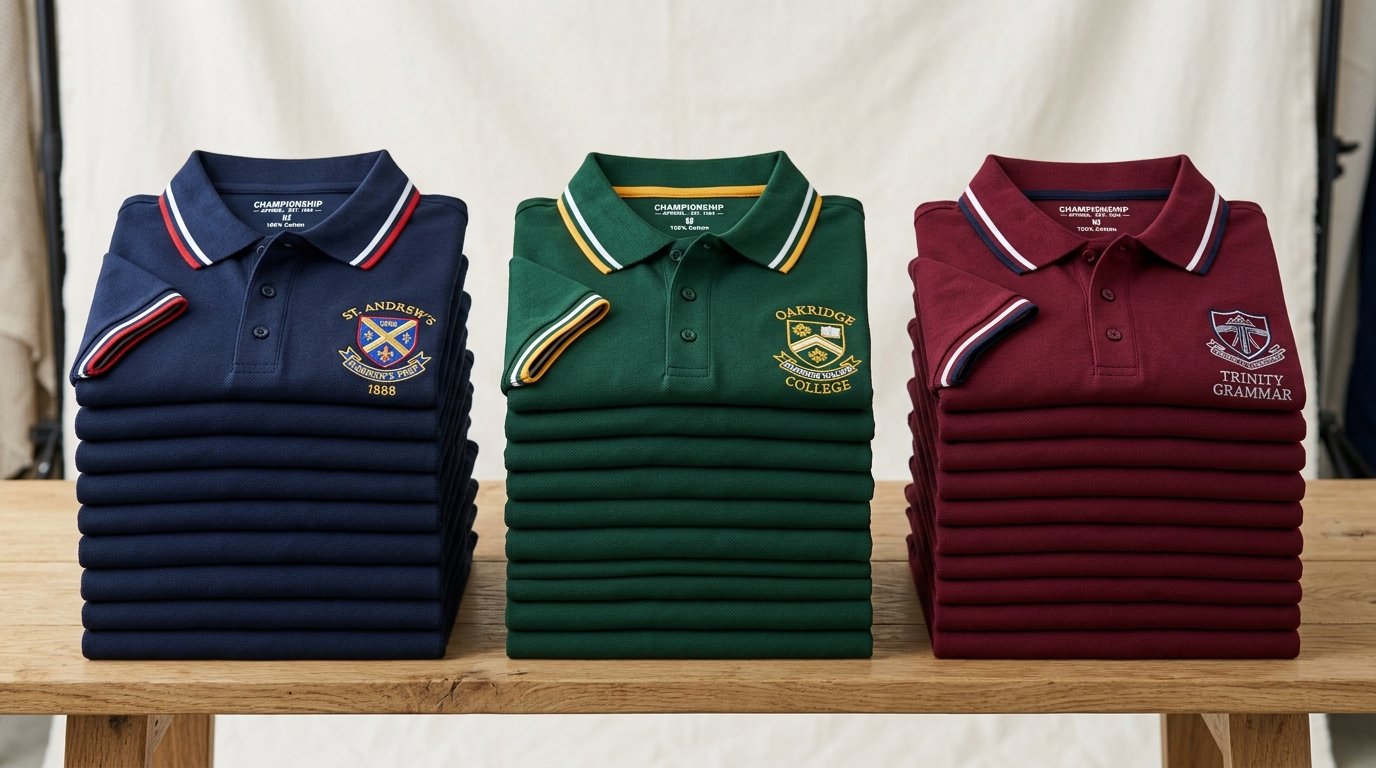
Polo shirts require a thicker fabric than t-shirts to support the weight of a flat-knit collar, button placket, and embroidered chest logo. At 220 GSM pique (matty knit), the fabric creates a crisp, professional silhouette that drapes cleanly over formal trousers without clinging to the body. Compare fabric textures in our Pique vs Single Jersey vs Dri-Fit Guide.
4. 240+ GSM: Heavyweight Oversized Streetwear & Luxury Polos
Modern streetwear fashion has shifted aggressively toward boxy, heavyweight silhouettes. A 240 to 280 GSM t-shirt gives that signature relaxed, drop-shoulder look popularized by global streetwear labels. In polo shirts, 240 GSM combined with Mercerized or Supima cotton delivers a silky, lustrous finish suited for C-suite executive gifting and luxury hospitality.
Yarn Quality vs GSM: Why GSM Isn’t the Only Metric
Two t-shirts can both weigh 180 GSM, yet feel completely different. The secret lies in yarn processing:
- Carded Cotton (Karded): Uses short staple fibers. Feels coarse, pills easily after 3 washes, but is inexpensive.
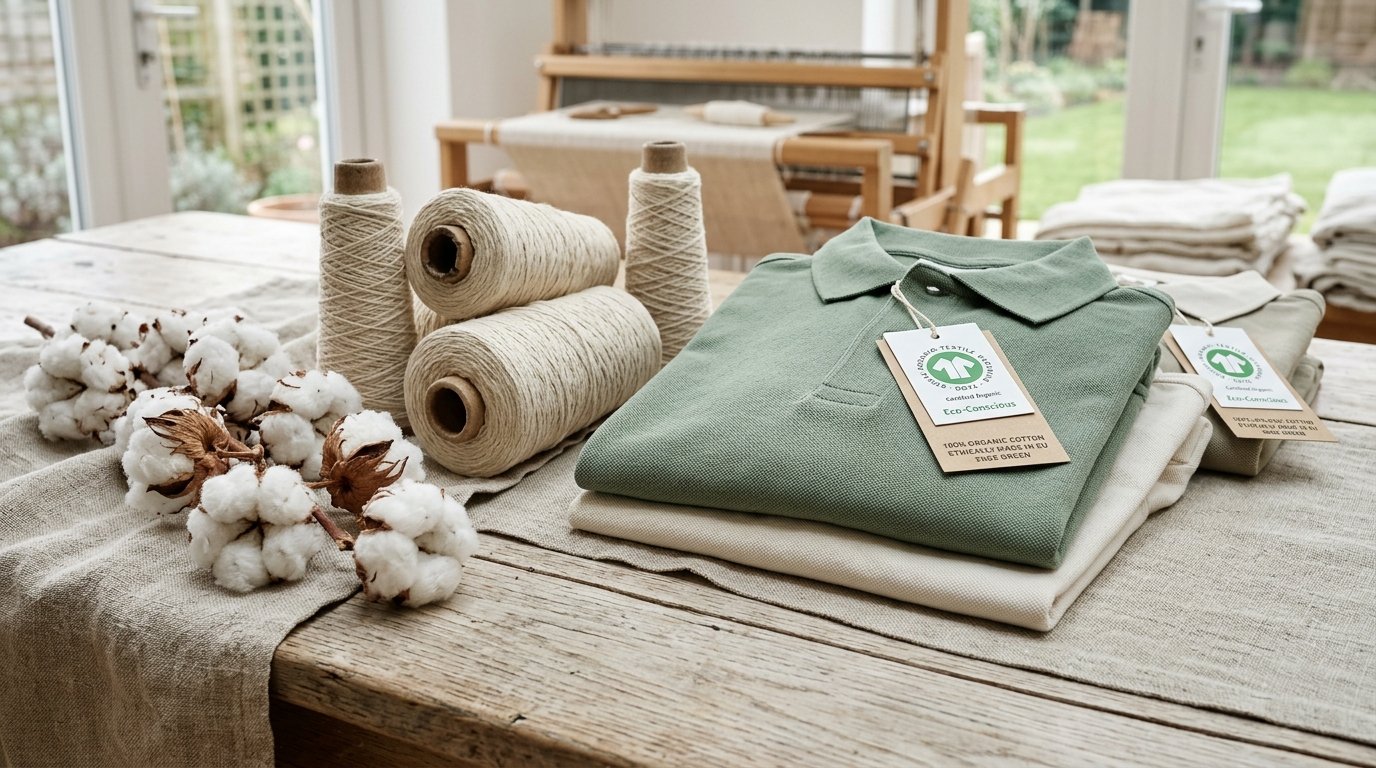
- Combed Cotton: Combing removes short fibers and impurities, leaving long, aligned fibers that feel soft and resist pilling.
- Compact Super Combed Cotton: Uses pneumatic air jets to eliminate hairy yarn ends, producing an ultra-smooth surface for razor-sharp printing.
- Bio-Washing (Enzyme Wash): An eco-cellulase bath removes protruding micro-fibers, giving the fabric a peach-soft touch and preventing fuzz formation.
Need Fabric Swatches for Your Next Bulk Order?
Request a physical Fabric Swatch Kit from Polos Inc featuring 160 GSM jersey, 220 GSM pique, 240 GSM Supima, and 280 GSM French terry directly from our Tirupur mill.
💬 Request Fabric Swatch Kit on WhatsApp (+91 98433 50000)
Or review our Corporate Uniform Manufacturing Services.